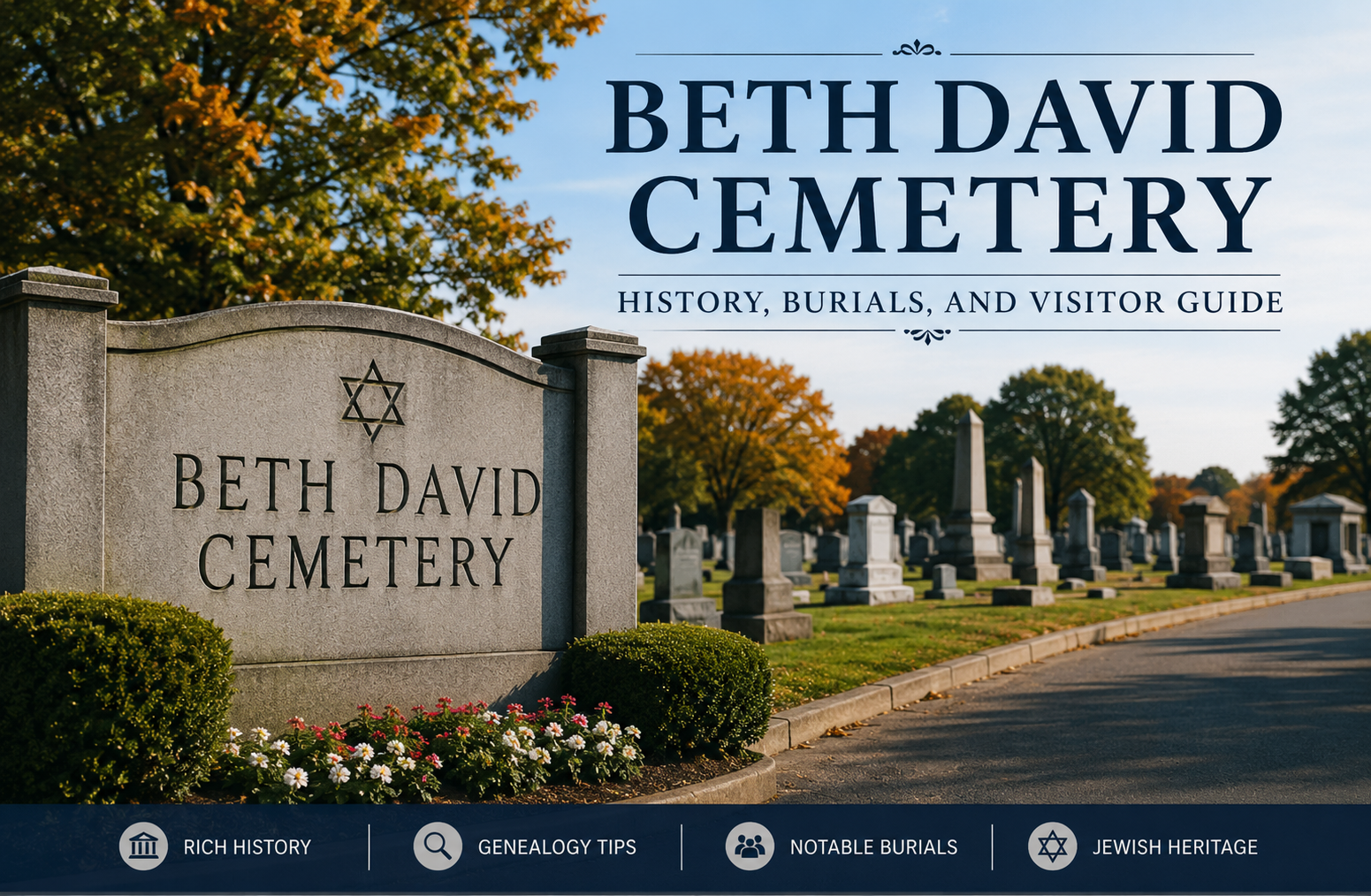
Beth David Cemetery: History, Burials, and Visitor Guide
Beth David Cemetery is one of the most historically significant Jewish burial grounds in New York. For families researching ancestry, historians studying immigrant communities, or visitors seeking information about notable burials, Beth David Cemetery offers a remarkable window into Jewish life, culture, and history in the United States. Its extensive grounds, thousands of graves, and deep community connections make it an important landmark for understanding generations of Jewish heritage.
Understanding Beth David Cemetery
Located in Queens, New York, this cemetery serves as the final resting place for thousands of individuals from diverse Jewish communities. Established during a period of significant Jewish immigration to the United States, it reflects the traditions, values, and communal structures that shaped Jewish life throughout the twentieth century.
Unlike many smaller burial grounds, the site contains numerous sections associated with synagogues, mutual aid societies, family organizations, and landsmanshaftn. These organizations played a crucial role in helping immigrants adapt to life in America while preserving cultural and religious traditions.
Today, the cemetery remains an active place of remembrance and historical significance. Families continue to visit loved ones, researchers explore genealogical records, and community members honor generations who helped build Jewish life in New York.
Beth David Cemetery and Its Historical Importance
Origins and Foundation
The cemetery was established during a time when New York experienced substantial population growth fueled by immigration from Eastern Europe. Jewish communities sought burial grounds that aligned with religious customs and communal values.
Burial societies often purchased dedicated plots where members and their families could be laid to rest together. These societies provided social support, financial assistance, and a sense of belonging for immigrants navigating a new country.
As these organizations grew, cemetery sections expanded accordingly, creating a landscape that reflects the history of entire communities rather than individual families alone.
A Reflection of Jewish Immigration
One of the most valuable aspects of studying the cemetery is its connection to Jewish immigration patterns.
Visitors can observe:
- Family names representing diverse European regions
- Inscriptions written in Hebrew, Yiddish, and English
- Memorial styles that evolved across generations
- Evidence of changing cultural identities over time
These features offer historians and descendants important clues about migration, settlement, and community development.
Connection to New York’s Growth
The development of Jewish neighborhoods throughout New York was closely linked to institutions such as synagogues, schools, charitable organizations, and cemeteries.
As communities expanded from Manhattan into Brooklyn, Queens, and beyond, burial grounds became essential components of communal life. The cemetery stands as a historical record of these transitions and the people who experienced them firsthand.
Layout and Organization
Many first-time visitors are surprised by the scale and complexity of the grounds.
Society Sections
Numerous burial areas are organized according to:
- Congregations
- Fraternal organizations
- Mutual aid societies
- Family associations
- Cultural groups
This structure reflects historical traditions in which community organizations assumed responsibility for burial arrangements.
Family Plots
Family plots remain a prominent feature throughout the cemetery. These sections illustrate how multiple generations maintained connections through shared memorial spaces.
Researchers often find valuable genealogical information by examining adjacent graves and family groupings.
Religious Features
Jewish burial customs influence the design and organization of many sections.
Common elements include:
- Hebrew inscriptions
- Traditional symbols
- Memorial stones
- Religious references
- Family lineage information
These details preserve both personal and communal histories.
Notable Burials and Cultural Significance
The cemetery contains graves associated with a wide range of individuals who contributed to American society.
Community Leaders
Many rabbis, educators, philanthropists, and community organizers are buried within its grounds. Their work helped establish institutions that continue serving Jewish communities today.
Immigrant Families
While famous names often attract attention, the true significance of the cemetery lies in its representation of ordinary families.
Each grave tells part of a larger story involving:
- Immigration
- Economic struggle
- Community building
- Cultural preservation
- Family legacy
Together, these stories create a rich historical record spanning multiple generations.
Historical Documentation
Cemeteries frequently serve as primary historical resources.
Researchers use gravestones to study:
- Demographic trends
- Language evolution
- Naming conventions
- Religious practices
- Family relationships
As a result, the cemetery functions as both a memorial space and a valuable historical archive.
Why People Search for Beth David Cemetery
Search interest generally falls into several categories.
Genealogical Research
Family historians often seek burial records to verify ancestral information.
A gravestone may reveal:
- Birth dates
- Death dates
- Hebrew names
- Family relationships
- Geographic origins
These details can unlock new directions in genealogical investigations.
Locating Relatives
Many visitors are searching for specific family members buried within the grounds.
Because of the cemetery’s size, locating a grave can require advance preparation and access to section information.
Historical Interest
Students, scholars, and local historians frequently research burial grounds to better understand immigration history and community development.
Cultural Education
People interested in Jewish traditions often explore cemeteries to learn about memorial practices, symbolism, and historical continuity.
How to Research Records
Gather Family Information First
Before beginning a search, collect as much information as possible.
Helpful details include:
- Full names
- Alternate spellings
- Approximate dates
- Family connections
- Religious affiliations
Even small details can significantly improve search accuracy.
Review Cemetery Databases
Many researchers begin by consulting cemetery records and genealogy databases.
One useful resource for cemetery and memorial research is the National Park Service’s guidance on historic cemeteries.
Although not specific to this site, it provides valuable information about cemetery preservation and historical significance.
Verify Information Carefully
Historical records may contain:
- Spelling variations
- Translation differences
- Clerical errors
- Incomplete entries
Cross-referencing multiple sources often produces the most reliable results.
Challenges Visitors May Encounter
Large Size
Because the grounds contain many sections and thousands of graves, navigation can be challenging.
Visitors should identify:
- Section numbers
- Plot locations
- Row information
- Nearby landmarks
before arriving whenever possible.
Aging Records
Older records may not always be complete or easily accessible.
Researchers occasionally encounter missing information due to:
- Historical recordkeeping practices
- Organizational changes
- Language barriers
- Document deterioration
Language Differences
Older gravestones frequently include Hebrew or Yiddish inscriptions.
Interpreting these inscriptions may require specialized knowledge or translation assistance.
What Gravestones Reveal About History
Cemeteries often function as open-air historical archives.
Changing Languages
Early generations frequently used Hebrew and Yiddish inscriptions, while later generations increasingly incorporated English.
This shift reflects broader patterns of cultural adaptation and integration.
Artistic Evolution
Memorial designs evolved significantly over time.
Visitors can observe:
- Traditional religious symbolism
- Art Deco influences
- Modern memorial styles
- Personalized inscriptions
These changes mirror wider social and cultural developments.
Family Narratives
A single family plot may document:
- Immigration journeys
- Economic advancement
- Military service
- Community involvement
- Generational change
Such narratives provide valuable historical context that extends beyond individual biographies.
The Role of Jewish Burial Traditions
Understanding Jewish burial customs enhances appreciation for the cemetery’s significance.
Respect for the Deceased
Jewish tradition places strong emphasis on honoring those who have passed away.
This respect influences:
- Burial practices
- Memorial customs
- Cemetery maintenance
- Family visitation
Visiting Graves
Many visitors place small stones on graves as a sign of remembrance and respect.
This practice symbolizes ongoing connection and serves as a visible expression of remembrance.
Preservation of Memory
Jewish communities have long emphasized preserving memory across generations.
Cemeteries play a central role in maintaining these connections and transmitting family history.
Genealogy Tips for Family Researchers
Start With Known Relatives
Begin with the most recent confirmed family member and work backward through generations.
This approach reduces errors and improves accuracy.
Document Every Discovery
Maintain detailed records of:
- Names
- Dates
- Locations
- Sources
- Relationships
Organized documentation prevents confusion during long-term research.
Photograph Grave Markers
When permitted, photographs provide permanent records for future reference and analysis.
Compare Multiple Sources
Successful genealogical research typically involves combining:
- Cemetery records
- Census records
- Immigration records
- Family documents
- Historical archives
Together, these sources create a more complete picture of family history.
Preserving Historical Cemeteries
Historic burial grounds face ongoing preservation challenges.
Environmental Factors
Weather, pollution, and natural aging can affect monuments over time.
Documentation Efforts
Digitization projects have improved access to records while helping preserve historical information.
Community Involvement
Preservation often depends on collaboration among:
- Families
- Historians
- Religious organizations
- Volunteers
- Preservation professionals
These efforts help ensure future generations can continue learning from historical burial grounds.
Frequently Asked Questions
Where is Beth David Cemetery located?
It is located in Queens, New York, and serves as one of the largest Jewish cemeteries in the region.
Why is Beth David Cemetery historically important?
It preserves the history of Jewish immigration, community development, and family heritage across multiple generations.
Can visitors locate family graves?
Yes. Many visitors conduct genealogical research and use cemetery records to find relatives buried there.
Are there notable people buried there?
Yes. The cemetery contains the graves of community leaders, religious figures, and individuals connected to significant historical developments.
Why do visitors place stones on graves?
Placing stones is a longstanding Jewish tradition that symbolizes remembrance, respect, and an enduring connection to the deceased.
Is the cemetery useful for genealogy research?
Absolutely. Burial records, inscriptions, and family plot information can provide valuable clues for tracing ancestry and family history.
Conclusion
Beth David Cemetery represents far more than a burial ground. It serves as a historical archive, a cultural landmark, and a place of remembrance for countless families. Through its graves, inscriptions, and community sections, it preserves stories of immigration, resilience, faith, and identity. Whether someone is researching family roots, exploring Jewish history, or seeking a deeper understanding of New York’s immigrant communities, the cemetery offers valuable insights that connect the past with the present.