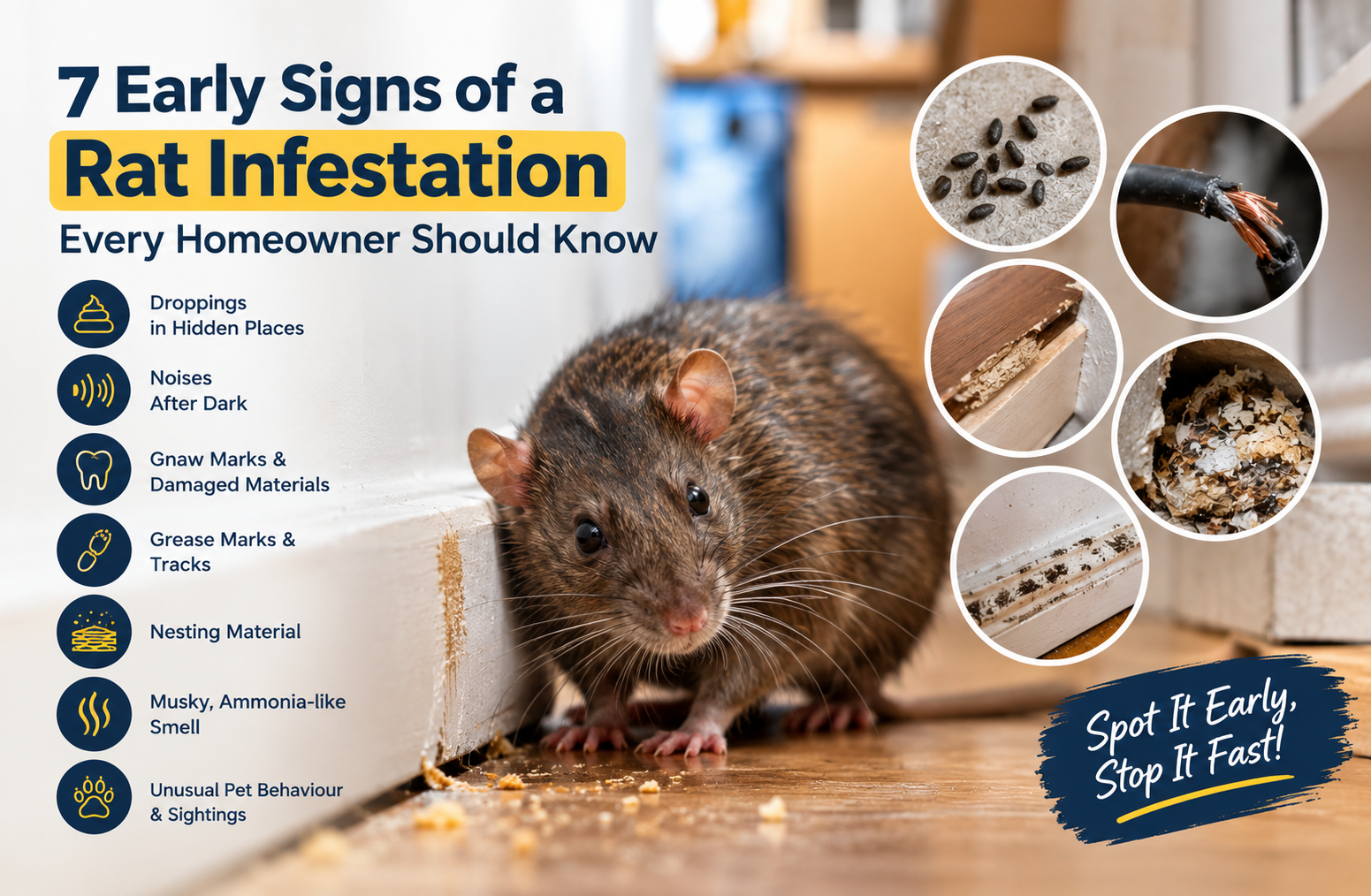
7 Early Signs of a Rat Infestation Every Homeowner Should Know
Rats are among the most unwelcome visitors a home can get. They move indoors when the weather turns colder, and once inside they multiply quickly, damage property and spread bacteria wherever they travel. The earlier you discover them, the easier and cheaper the problem is to solve, so it pays to know exactly what to look for.
The challenge is that rats are shy and mostly active at night, which means many infestations grow quietly for weeks before anyone notices. If you suspect activity in your home, it is worth contacting a professional pest control company such as Skadedyrvakta for an inspection, because a confirmed early finding almost always means a simpler and less invasive treatment. In the meantime, here are the warning signs you can check for yourself.
1. Droppings in hidden places
Droppings are the clearest evidence of all. Rat droppings are dark and spindle shaped, usually one to two centimetres long, and you will typically find them along walls, behind kitchen appliances, in the loft, in the basement or inside cupboards. Fresh droppings are dark and soft, while older ones turn grey and crumbly, which helps you judge whether the activity is recent or historical.
2. Noises after dark
Scratching, gnawing or scurrying sounds from walls, ceilings and the space under floors are often the first thing people notice. Rats are most active in the evening and at night, so listen carefully when the house is quiet. Regular noise from the same area usually means an established runway or a nest nearby.
3. Gnaw marks and damaged materials
A rat’s front teeth grow continuously, so the animal gnaws constantly to keep them short. Look for fresh bite marks on skirting boards, door frames, stored boxes and food packaging. Chewed electrical cables deserve special attention, since damaged wiring is a recognised fire risk and should be checked by an electrician.
4. Grease marks and tracks
Rats follow the same routes night after night, and the oil and dirt in their fur leaves dark smudges along skirting boards, pipes and beams. In dusty areas such as attics you may also see footprints and tail drag marks. A simple trick is to sprinkle a thin layer of flour overnight in a suspected area and check it in the morning.
5. Nesting material
Shredded paper, insulation, textiles or cardboard gathered in a quiet, warm corner is a strong sign that rats are not just passing through but settling in. Common nesting spots include the back of storage rooms, voids behind panels and the area around hot water tanks.
6. A musky, ammonia-like smell
An active infestation produces a stale, musky odour that becomes more noticeable in enclosed spaces. Pets often react before people do, so take note if your cat or dog suddenly becomes fixated on a particular wall, cupboard or corner.
7. Unusual pet behaviour and sightings
Seeing a live rat indoors during the day is a serious signal, because it often means the population has grown large enough to push individuals out of their hiding places. At that stage, waiting is the worst option.
Why acting early matters
A single pair of rats can grow into a large population within a few months. They contaminate food, ruin insulation, undermine hygiene and can damage the structure of the building itself. Professional treatment deals with both the animals and the entry points they used, so the problem does not simply return the following season.
Rats have lived alongside humans for centuries, and the common brown rat is now found almost everywhere people live. That is exactly why a little vigilance matters. Walk through these checkpoints a couple of times a year, especially in autumn, and act quickly if anything looks suspicious.