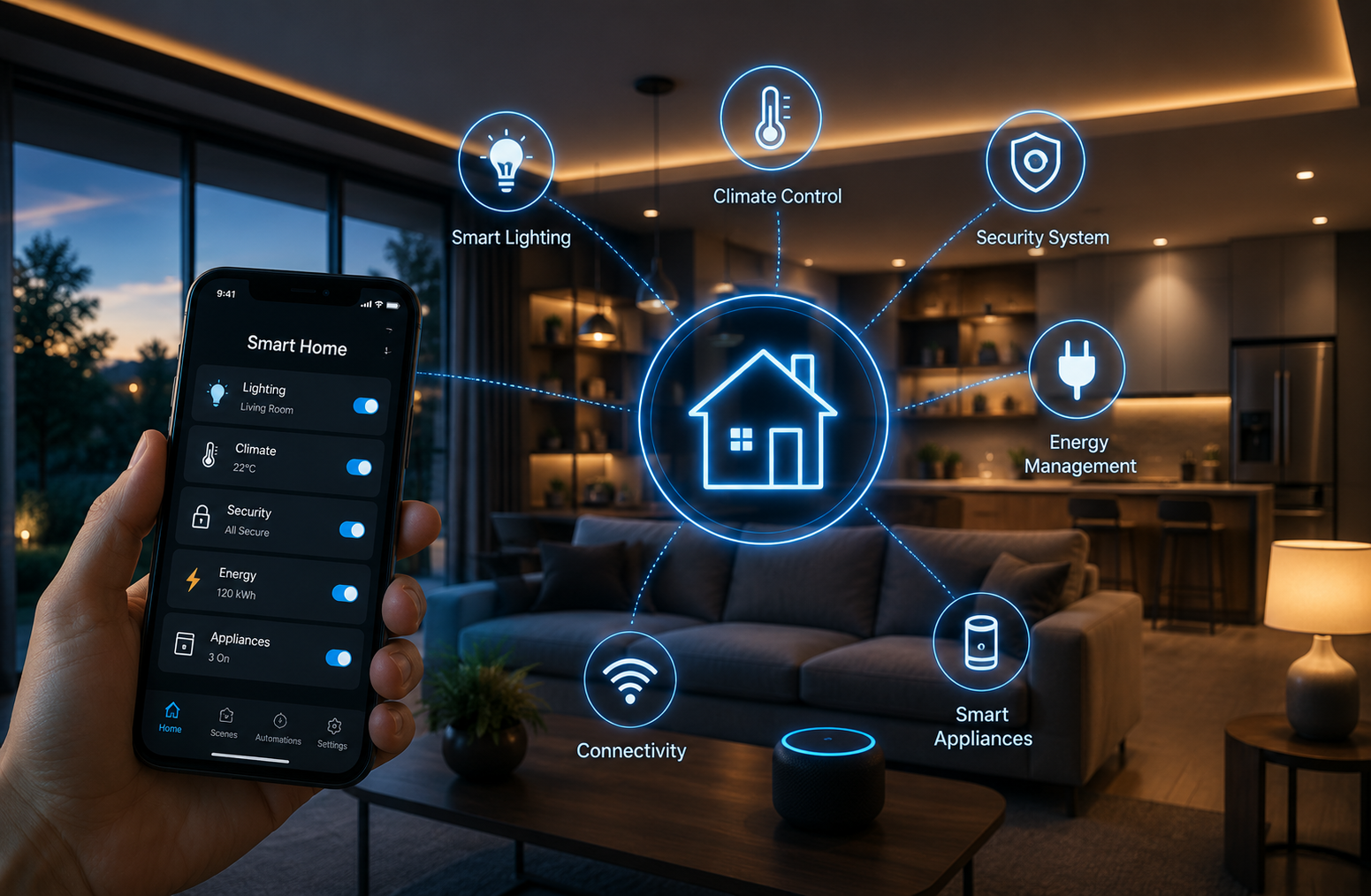
How Smart Homes Are Learning to Predict What People Need
Smart homes were once associated with simple conveniences such as remote-controlled lights or programmable thermostats. Today, they are becoming far more responsive. Modern systems can learn daily routines, recognize patterns, and adjust the home environment before a person gives a direct command. Instead of reacting only after someone presses a button, smart technology is beginning to anticipate what residents may need next.
This shift is powered by connected devices, artificial intelligence, sensors, and automation platforms that collect and interpret information over time. A smart home may notice when people usually wake up, which rooms they use most, how they adjust the temperature, and when certain appliances are typically turned on. By combining these patterns, the system can make small decisions automatically and create a more comfortable, efficient, and personalized living space.
The same technology is also influencing how smart-home companies present their products and services. A startup offering home automation, energy monitoring, or connected security can use a professional logo maker to build a consistent identity across its website, mobile app, packaging, and installation materials. In a market where customers are placing connected devices inside their homes, strong branding can help a company appear more credible, reliable, and trustworthy.
From Remote Control to Prediction
Early smart-home systems mostly focused on remote access. Users could turn lights on through an app, adjust the thermostat while away, or check a security camera from another location.
These features were useful, but they still required the user to decide what should happen and when. The technology simply made the action easier.
Predictive smart homes work differently. They learn from repeated behavior and begin making suggestions or automatic adjustments.
For example, a system may notice that the kitchen lights are turned on every weekday at 7:00 a.m. and the thermostat is increased shortly afterward. Over time, it may begin preparing the room automatically before the household wakes up.
This does not mean the home understands people in the same way another person would. It identifies patterns in data and uses them to predict likely actions.
The more consistent the routine, the easier it becomes for the system to anticipate what may be needed.
Learning Daily Habits
Every household has routines, even when residents do not consciously think about them.
People often wake up at similar times, use certain rooms during specific parts of the day, and follow predictable patterns before leaving home or going to sleep.
Smart-home devices can observe these patterns through motion sensors, connected appliances, temperature controls, door sensors, and other systems.
A home may learn that one resident prefers a cooler bedroom at night while another likes the living room warmer in the evening. It may recognize that the lights are usually dimmed after dinner or that the coffee machine is used shortly after the bedroom lights turn on.
These small pieces of information allow the system to create routines that feel more natural.
Instead of programming every action manually, users can allow the technology to learn over time and then review or adjust the suggested automation.
Predictive Climate Control
Heating and cooling are among the most practical areas for predictive smart-home technology.
Traditional thermostats maintain a selected temperature. Programmable models follow a fixed schedule. Smart thermostats can go further by learning when people are usually home, how quickly the house warms or cools, and which temperatures are preferred at different times.
A predictive system may begin heating the home before residents return from work rather than waiting until they arrive. It can also reduce energy use when the house is empty.
Some systems consider outside temperature, weather forecasts, sunlight, humidity, and room occupancy.
For example, a sunny room may require less heating during the afternoon, while a bedroom may need cooling before sleep.
These adjustments can improve comfort while reducing unnecessary energy consumption.
The system is not simply following a clock. It is using several signals to predict what conditions residents are likely to prefer.
Lighting That Adapts Automatically
Smart lighting can do more than turn on and off through voice commands.
Predictive lighting systems can adjust brightness and color temperature based on time, room usage, and individual preferences.
In the morning, lights may gradually brighten to support a more comfortable wake-up routine. During the evening, they may become warmer and softer to create a calmer atmosphere.
Motion and presence sensors can also help the system understand which rooms are being used.
If someone regularly moves from the bedroom to the kitchen at a certain time, the lights along that path may turn on automatically at a low brightness.
The system can also learn when lights are usually left on unnecessarily and switch them off after the room becomes empty.
These small automations may seem simple, but together they make the home feel more responsive and reduce repetitive tasks.
Smarter Energy Management
Energy management is one of the most important benefits of predictive smart homes.
Connected devices can monitor electricity use and identify patterns that residents may not notice.
A system may detect that an appliance is consuming more power than usual, which could indicate a maintenance problem. It may also identify periods when electricity use is highest and recommend changes.
Some smart homes can schedule energy-intensive tasks during lower-cost periods. Washing machines, dishwashers, or electric vehicle chargers may run when demand is lower or when renewable energy is more available.
Homes with solar panels and battery storage can use predictive systems to decide when to store energy, use it, or return it to the grid.
Weather forecasts can also influence these decisions. If the next day is expected to be sunny, the system may use more stored energy overnight because it predicts that the battery will recharge soon.
This turns the home into a more active participant in energy management rather than a passive consumer.
Kitchens That Anticipate Household Needs
The kitchen is another area where predictive technology is becoming more useful.
Smart refrigerators can monitor stored items, track expiration dates, and suggest shopping lists. Some systems can identify products through internal cameras or connected packaging.
Over time, the system may learn which foods a household buys regularly and remind residents when supplies are running low.
Connected ovens can recommend cooking settings based on the selected recipe or food type. Coffee machines may begin preparing a drink at the time a resident usually wakes up.
Future kitchens may combine several sources of information. A system could consider dietary preferences, available ingredients, schedules, and previous meals before suggesting what to cook.
This could reduce food waste and make meal planning easier.
However, these systems are most helpful when users remain in control. Recommendations should support household decisions rather than make them feel restricted.
Predictive Home Security
Smart security systems are also becoming more capable of distinguishing normal activity from unusual behavior.
Traditional alarms react to specific events, such as a door opening or motion being detected. Predictive systems analyze patterns and context.
For example, a front door opening at 6:00 p.m. may be normal if a resident usually returns home at that time. The same event at 3:00 a.m. may be considered unusual.
Smart cameras can distinguish between people, animals, vehicles, and package deliveries. They may alert residents only when the activity appears relevant.
Some systems can also recognize when a garage door was left open or when a window remains unlocked after everyone leaves.
By learning household routines, security systems can reduce unnecessary alerts and focus attention on events that are more likely to matter.
Still, security technology must be designed carefully. Incorrect predictions can cause inconvenience, while weak privacy protections can create serious risks.
Supporting Older Adults and People With Disabilities
Predictive smart-home technology can make daily life safer and more independent for older adults and people with disabilities.
Sensors can detect unusual changes in movement or routine. If someone normally enters the kitchen every morning but does not appear, the system may send a gentle reminder or notify a trusted contact.
Smart lighting can reduce the risk of falls by illuminating hallways automatically at night. Voice controls can help people operate appliances, doors, curtains, and entertainment systems without needing to move across the room.
Medication reminders and connected health devices may also support daily routines.
The goal should not be constant surveillance. Useful systems should focus on safety, independence, and consent.
Residents should understand what data is collected, who can access it, and when alerts are sent.
When implemented respectfully, predictive technology can help people remain in their homes longer and manage daily tasks more comfortably.
Homes That Respond to Mood and Comfort
Some smart-home systems are beginning to consider comfort beyond temperature and lighting.
Wearable devices, voice assistants, and connected wellness tools may provide information about sleep, stress, activity, or mood.
A home could respond by adjusting lighting, music, temperature, or noise levels.
For example, after a stressful day, the system might suggest softer lighting and a quieter environment. Before an important morning, it could prepare a more gradual wake-up routine.
These experiences remain limited and should be treated carefully. Emotional states are complex, and technology cannot always interpret them accurately.
A home should not make strong assumptions about how someone feels. It can offer options, but residents should remain able to accept, reject, or change them.
The best systems will support comfort without becoming intrusive.
The Importance of Privacy
Predictive smart homes rely on large amounts of personal data.
They may know when people wake up, when they leave, which rooms they use, what devices they own, and how they behave throughout the day.
This information can make automation more useful, but it also creates privacy concerns.
Residents need to know where their data is stored and whether it is processed locally or sent to external servers.
They should also understand which companies can access the information and whether it may be used for advertising or product development.
Strong encryption, secure passwords, software updates, and two-factor authentication are important.
Users should review privacy settings and disable features they do not need.
A smart home should make life more convenient without requiring residents to give up unnecessary control over personal information.
Avoiding Over-Automation
Automation can be helpful, but too much of it can become frustrating.
A system may misinterpret an unusual day as a permanent change in routine. It may turn lights off while someone is still in the room or adjust the temperature when the user does not want it to.
Predictive technology should therefore be easy to override.
Residents should be able to correct the system, change a routine, or temporarily pause automation.
The most successful smart homes will not try to control every detail. They will handle repetitive tasks quietly and ask for confirmation when uncertainty is high.
Users should also begin with a few practical automations rather than connecting every device at once.
A simple routine for lighting, temperature, or security is easier to test and improve.
As trust grows, more features can be added gradually.
Compatibility Between Devices
One of the biggest challenges in smart-home technology is compatibility.
A household may own devices from several brands, each with its own app, account, and technical system.
When these devices do not communicate well, automation becomes complicated.
Open standards and shared platforms are helping improve this situation. The goal is to allow lights, locks, thermostats, sensors, and appliances from different manufacturers to work together more easily.
Better compatibility is essential for predictive homes because useful automation often depends on several devices sharing information.
For example, a thermostat may need occupancy data from motion sensors and location information from a phone before adjusting the temperature.
Without reliable communication, the prediction may be incorrect.
Consumers should check compatibility before purchasing devices and avoid building a system that depends entirely on one feature or company.
The Future of Predictive Living
Smart homes are likely to become more contextual over time.
Instead of responding to isolated commands, they may understand combinations of events.
A future system could recognize that a resident is arriving home later than usual, the weather is cold, and no one else is inside. It may turn on the entry lights, adjust the temperature, and delay a scheduled appliance automatically.
Homes may also become better at adapting to different people. Rather than applying one setting to everyone, the system could recognize individual preferences in shared spaces.
Predictive maintenance may also become more common. Appliances, heating systems, and plumbing sensors could identify early signs of problems before a major failure occurs.
This could reduce repair costs and prevent damage.
However, the future of smart living will depend on more than technical capability. People will need systems that are transparent, secure, reliable, and easy to control.
Conclusion
Smart homes are evolving from collections of connected devices into systems that can learn patterns and anticipate everyday needs.
They can adjust lighting, manage temperature, reduce energy use, support security, and make daily routines more convenient.
For older adults, people with disabilities, and busy households, predictive technology may also improve independence and safety.
At the same time, these benefits come with important questions about privacy, control, compatibility, and accuracy.
The smartest home is not the one that automates everything. It is the one that understands when automation is useful and when people should make the decision themselves.
As the technology improves, predictive homes may become less noticeable and more natural. The most successful systems will work quietly in the background, reduce unnecessary effort, and adapt without taking control away from the people who live there.