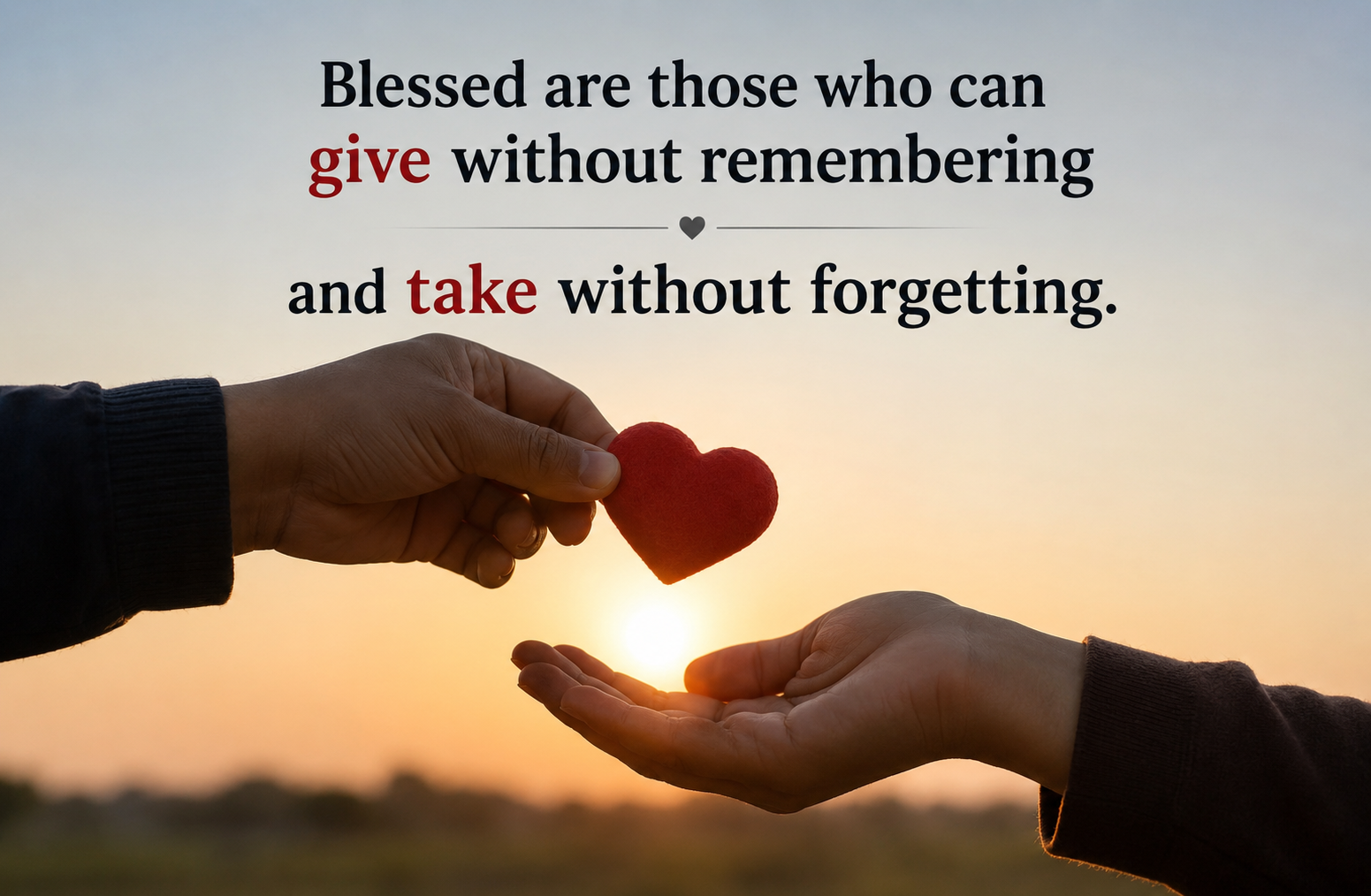
Blessed Are Those Who Can Give Without Remembering and Take Without Forgetting
The phrase blessed are those who can give without remembering and take without forgetting carries one of the deepest lessons about kindness, gratitude, and human relationships. In a world where many people keep score of every favor they do and quickly forget the help they receive, this timeless saying offers a completely different way of living. It teaches that true generosity expects nothing in return, and genuine gratitude never forgets the kindness of others.
These words encourage us to become people who give freely and appreciate deeply. Whether in friendships, families, workplaces, or communities, the principle behind this quote can transform relationships and create a more compassionate society.
Understanding the Meaning of the Quote
At its core, the saying contains two powerful ideas.
Give Without Remembering
Giving without remembering means helping others without keeping a mental record of every good deed. It is the act of offering time, support, money, or kindness simply because it is the right thing to do.
Many people unconsciously keep score.
They might think:
- I helped them three times.
- I lent them money.
- I always support them.
When generosity becomes a transaction, it often leads to disappointment and resentment. True giving happens when kindness is offered freely, without expecting recognition, repayment, or praise.
Take Without Forgetting
The second part of the quote is equally important. Taking without forgetting means receiving help with gratitude and remembering the people who supported you during difficult times.
Grateful people acknowledge the kindness of others. They appreciate support and carry that appreciation with them long after the moment has passed.
Together, these ideas create a beautiful balance.
Give selflessly.
Receive gratefully.
Why This Quote Still Matters Today
Modern life often encourages people to think in terms of exchanges and rewards. Social media highlights public acts of generosity. Many people seek recognition for their good deeds.
The message behind blessed are those who can give without remembering and take without forgetting reminds us that the greatest acts of kindness often happen quietly.
A friend listens during a difficult time.
A parent sacrifices for a child.
A teacher spends extra time helping a struggling student.
A stranger offers encouragement.
Many of these acts are never celebrated publicly, yet they leave a lasting impact.
The Psychology of Giving
Research consistently shows that helping others benefits both the giver and the receiver.
Acts of kindness can:
- Reduce stress.
- Increase feelings of happiness.
- Strengthen social connections.
- Improve emotional well being.
- Create a sense of purpose.
People who practice generosity often report greater life satisfaction because giving creates meaningful connections with others.
However, the emotional benefits are strongest when generosity is genuine and not driven by expectations of reward.
Why People Keep Score
Despite understanding the value of generosity, many people still keep track of their good deeds.
This happens for several reasons.
Fear of Being Used
People worry that others may take advantage of their kindness.
Desire for Recognition
Everyone likes to feel appreciated and valued.
Need for Fairness
Humans naturally seek balance in relationships.
While these feelings are understandable, constantly keeping score can damage relationships and create unnecessary resentment.
Selfless generosity does not mean allowing others to exploit you. It means helping with a sincere heart while maintaining healthy boundaries.
The Power of Gratitude
The second part of the quote may actually be harder to practice.
Many people remember the help they gave but quickly forget the support they received.
Gratitude changes this perspective.
Grateful people recognize that no one succeeds entirely alone.
Every person has benefited from:
- Family support.
- Friendship.
- Guidance from mentors.
- Opportunities created by others.
- Acts of kindness from strangers.
Remembering these gifts creates humility and strengthens relationships.
Real Life Examples of the Quote in Action
Parents and Children
Parents often give without expecting repayment. They sacrifice sleep, time, money, and comfort for their children.
Children who remember these sacrifices often develop deeper appreciation and stronger family bonds.
Teachers and Students
A teacher may invest extra effort in helping a struggling student without expecting anything in return.
Years later, that student may still remember the support and guidance that changed their life.
Friendships
The strongest friendships are built on generosity and gratitude rather than keeping score.
Friends support one another because they care, not because they expect immediate repayment.
Communities
Communities become stronger when people help each other without calculating personal gain.
Volunteers, neighbors, and community leaders often embody the principle of giving without remembering.
Why Selfless Giving Is Difficult
Living according to this quote sounds simple, but it can be challenging.
Human Nature
People naturally want appreciation and recognition.
Past Hurt
Experiences of betrayal can make generosity difficult.
Social Expectations
Modern culture often emphasizes personal gain and individual success.
Emotional Exhaustion
Constantly giving without proper boundaries can lead to burnout.
The lesson is not to become a person who gives endlessly without caring for yourself. Instead, it is about developing a generous spirit while maintaining wisdom and balance.
How to Practice Giving Without Remembering
Focus on the Joy of Helping
Instead of asking what you will receive, ask how your actions might improve someone else’s life.
Give Quietly
Not every act of kindness needs to be announced.
Sometimes the most meaningful generosity happens privately.
Avoid Keeping Mental Records
Try not to count every favor you do for others.
Relationships are not accounting systems.
Give What You Can
Generosity is not limited to money.
You can give:
- Time.
- Encouragement.
- Knowledge.
- Support.
- Compassion.
- Patience.
Accept That Some Kindness Will Never Be Repaid
Not every act of generosity will be acknowledged or returned.
That does not make the act meaningless.
How to Practice Taking Without Forgetting
Express Gratitude Regularly
Thank the people who support you.
Simple words of appreciation can have a powerful impact.
Remember Those Who Helped You
Think about the people who influenced your journey.
Their contributions may have shaped your life more than you realize.
Pay Kindness Forward
One of the best ways to honor those who helped you is by helping others.
Stay Humble
Success often depends on support from many people.
Humility grows when we recognize this truth.
Lessons for Personal Relationships
Relationships often suffer because people remember every sacrifice they made and forget every kindness they received.
Healthy relationships require both generosity and gratitude.
When both people practice these qualities, trust grows naturally.
Instead of asking:
What have they done for me lately?
Ask:
How can I appreciate what they have already done?
This simple shift can transform marriages, friendships, and family relationships.
Lessons for Leadership
Great leaders often embody the principles found in blessed are those who can give without remembering and take without forgetting.
Effective leaders:
- Share credit with others.
- Support their teams.
- Appreciate contributions.
- Remember those who helped them succeed.
Employees are more likely to trust leaders who serve others rather than constantly seeking recognition.
The Role of Gratitude in Success
Many successful people openly acknowledge mentors, teachers, and family members who helped them along the way.
Remembering the people who supported your journey keeps success grounded in humility.
Gratitude also encourages stronger professional relationships because people appreciate being remembered and valued.
The Difference Between Generosity and People Pleasing
Some people confuse selfless giving with sacrificing their own well being.
The two are very different.
Generosity
Giving freely from a place of kindness and choice.
People Pleasing
Giving out of fear, guilt, or the need for approval.
Healthy generosity includes boundaries.
You can give without remembering while still protecting your emotional and physical well being.
Spiritual and Philosophical Perspectives
Many religious and philosophical traditions emphasize generosity and gratitude.
The idea that kindness should be offered freely appears in numerous teachings around the world.
Similarly, gratitude has long been considered a cornerstone of wisdom and character.
The enduring popularity of this quote suggests that these values resonate across cultures and generations.
Building a Life Around This Principle
Living according to this quote requires intentional habits.
Practice Daily Gratitude
Take a few moments each day to remember people who have helped you.
Perform Small Acts of Kindness
Simple actions can have a significant impact.
Stop Seeking Recognition
Allow your actions to speak for themselves.
Appreciate Others More Often
Never assume people know you are grateful.
Tell them.
Teach These Values to Children
Children who learn generosity and gratitude early often carry these habits throughout life.
Common Challenges When Living This Principle
Feeling Unappreciated
Sometimes people will not acknowledge your kindness.
Being Taken Advantage Of
Healthy boundaries remain important.
Forgetting to Express Gratitude
Busy lives often cause people to overlook acts of kindness.
Comparing Relationships
Every relationship is different and cannot be measured like a transaction.
Recognizing these challenges makes it easier to overcome them.
Practical Ways to Apply the Quote Every Day
Here are simple ways to put this wisdom into action.
- Write thank you messages to people who have helped you.
- Volunteer in your community.
- Offer encouragement to someone who is struggling.
- Help others anonymously when possible.
- Stop reminding people of past favors.
- Keep a gratitude journal.
- Celebrate the contributions of others.
Small actions practiced consistently can create significant changes in both personal happiness and relationships.
Why the Quote Continues to Inspire People
The reason blessed are those who can give without remembering and take without forgetting remains so powerful is because it addresses a universal human struggle.
Everyone wants appreciation.
Everyone wants kindness.
Everyone wants meaningful relationships.
This quote offers a practical path toward achieving these things.
By giving freely and receiving gratefully, people create stronger connections and more fulfilling lives.
Frequently Asked Questions
What does blessed are those who can give without remembering and take without forgetting mean?
It means helping others without expecting repayment and remembering the kindness you receive with gratitude.
Who originally said this quote?
The exact origin of the quote is uncertain. It has been widely shared in various books, speeches, and inspirational writings over many years.
Why is gratitude important?
Gratitude improves relationships, increases happiness, and helps people appreciate the support they receive from others.
Does giving without remembering mean allowing people to use you?
No. Selfless generosity should still include healthy personal boundaries.
How can I become more grateful?
Practice thanking others, keep a gratitude journal, and regularly reflect on the people who have supported your journey.
Why do people keep score in relationships?
People often seek fairness, recognition, and appreciation, which can lead to keeping track of favors and sacrifices.
Conclusion
The wisdom contained in blessed are those who can give without remembering and take without forgetting is timeless because it speaks directly to the heart of human relationships. It encourages generosity that expects nothing in return and gratitude that never forgets the kindness of others.
In a world that often values transactions and recognition, this principle offers something deeper. It teaches us that meaningful relationships are built through selfless giving and sincere appreciation.
By practicing these values every day, we become more compassionate, humble, and connected to the people around us. The blessings described in this quote are not merely rewards from others. They are the peace, fulfillment, and stronger relationships that naturally grow from living with generosity and gratitude.