Lederhosen or Dirndl Dress? The 2026 Oktoberfest Buying Guide for Every Wardrobe
Tickets get booked, tables get reserved, flights get confirmed, and then the real planning begins. Every September, the same question lands in group chats across the world: what are we actually wearing to Oktoberfest? With the 2026 festival running from September 19 to October 4, the decision has a deadline attached, and the two answers that matter have not changed in more than a century. You either wear lederhosen, the leather breeches that built Bavarian workwear into a global icon, or you wear the dirndl, the bodice-and-skirt ensemble that turns a beer tent into a runway. This guide breaks down both garments piece by piece so you can decide which one belongs in your wardrobe first, what separates a keeper from a costume, and how to buy a size that still fits you next autumn.
What Lederhosen Actually Are, and Why the Leather Grade Decides Everything
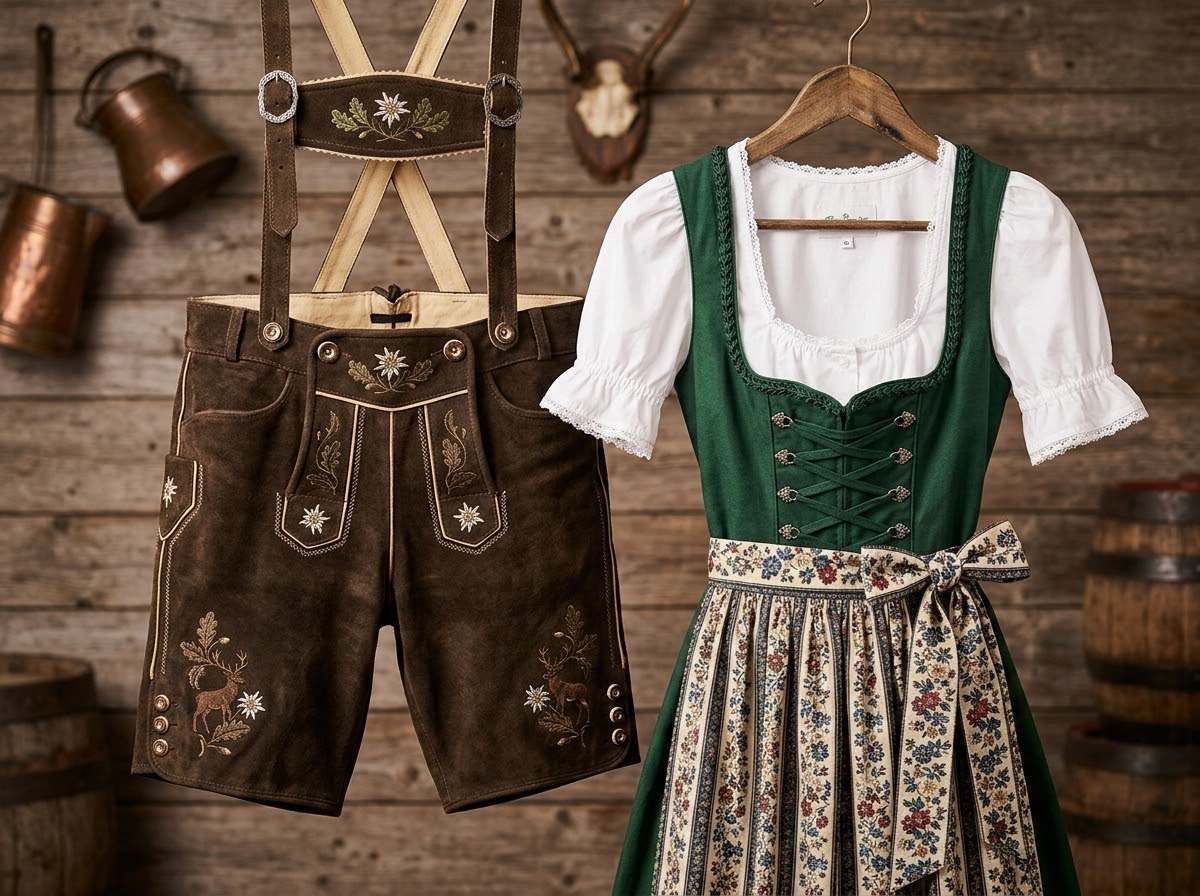
Lederhosen began as Alpine work trousers, cut short for mobility and made from leather because fabric could not survive farm labor. That origin still defines a good pair today. The leather grade is the single biggest factor in how they look, feel, and age. Suede cowhide is the entry point: durable, affordable, and stiff for the first few wears before it breaks in. Goat suede sits in the middle, noticeably softer and lighter on the leg. Deerskin is the premium tier, buttery from the first wear, with a matte nap that reads unmistakably authentic across a crowded tent.
Construction details matter almost as much. Look for real horn or antler-style buttons rather than plastic, a drop-front flap or clean button fly, reinforced stitching at the seat, and traditional embroidery across the front bib and side seams. The embroidery is not decoration for its own sake; regional motifs like edelweiss, oak leaves, and stag scenes are what visually separate heritage-grade pairs from party-shop imitations.
What Makes a Dirndl a Dirndl, Not Just a Dress
A true dirndl is a system of four parts working together: a fitted bodice, a blouse worn underneath, a full skirt, and an apron tied over it. The bodice does the structural work, shaping the waist with lacing, hooks, or a zip, while the blouse, usually white cotton with puffed or lace-trimmed sleeves, frames the neckline. Skirt length sets the tone. Mini lengths above the knee read playful and party-forward, midi lengths at or just below the knee are the festival standard, and long lengths carry a more formal, traditional presence.
Fabric quality is where cheap versions fall apart, sometimes literally. Cotton and cotton-blend dirndls hold their shape through a full day of sitting, standing on benches, and dancing. Satin-heavy budget versions crease within an hour and photograph poorly under tent lighting. Check that the apron is generously cut, because a skimpy apron ruins the silhouette of even a well-made dress.
The Head-to-Head: Comfort, Cost, and How Each One Wears Over a Long Day
Comfort is closer than most first-timers expect. Broken-in leather breeches move with you and shrug off spilled beer, dropped pretzels, and bench climbing without showing a mark. A well-fitted dirndl dress distributes its structure through the bodice, so it supports rather than squeezes, and the full skirt is genuinely easy to move in. The deciding factor is weather. Leather insulates well on cold evenings, while a dirndl breathes better through warm afternoons, which is worth knowing since late September in Munich can swing between both in a single day.
On cost, entry-level versions of each land in a similar range, but the ceilings differ. Premium deerskin lederhosen cost more than almost any dirndl because the raw material does, and they also last longer, routinely a decade or more with basic care. A quality dirndl rewards you differently: swap the apron and blouse and the same dress reads as a new outfit every season.
The Apron Bow Code and Other Details That Signal You Know What You Are Doing
The dirndl carries a piece of social signaling every wearer should know before walking into a tent. An apron bow tied on the wearer’s right traditionally signals taken, on the left signals single, centered in front signals a young woman or undecided, and centered at the back signals widowed or, by convention, a server. Locals genuinely read these signals, so tie deliberately.
Lederhosen have their own tells. Suspenders with an embroidered cross-strap are traditional but optional with a well-fitted waist. Wool trachten socks, either full calf-length or the two-piece loferl style, anchor the look, and rugged haferl-style shoes finish it. The fastest way to spot a tourist is white sneakers under leather breeches, and the fastest way to blend in is getting the socks right.
Sizing Both Garments So They Fit in Photos and at the Table
Lederhosen should fit snug at the waist when new, because quality leather relaxes half a size to a full size with wear and never shrinks back. The hem should land mid-thigh for the short cut or just below the knee for kniebund styles, and the seat should sit close without pulling. If you are between sizes, size down in deerskin and stay true to size in stiffer cowhide.
Dirndl sizing runs the opposite direction of instinct. The bodice is meant to be firm, so if it feels loosely comfortable in the mirror, it is probably too big and will gape by mid-afternoon. Measure your underbust and waist rather than relying on your usual dress size, and remember the blouse is sized separately from the dress. Plus-size cuts in both garments are widely available in 2026, and the structured tailoring of traditional wear is famously flattering across every size, which is a real reason the dirndl has such loyal repeat buyers.
Which One to Buy First for Oktoberfest 2026
If you are building a wardrobe from zero, buy the garment that matches how you celebrate. Choose lederhosen if you want one purchase that lasts ten years, works for Oktoberfest, backyard parties, and themed events alike, and looks better every season as the leather develops character. Choose the dirndl if versatility per euro matters more, since apron and blouse changes multiply one dress into several looks, and if you want the option to dress the same silhouette up or down between a daytime tent session and an evening out.
Couples and friend groups increasingly split the difference deliberately, pairing his-and-hers traditional wear for photos that actually look coordinated. Whichever direction you go, order early. Sizes in the most popular cuts start thinning out by August every year, and 2026 will be no different.
Frequently Asked Questions
Can women wear lederhosen and men wear dirndls? Women’s lederhosen are a fast-growing category with cuts tailored for female proportions, and they are completely accepted at the festival. Men in dirndls appear mostly as a joke costume; if authenticity is the goal, men should stick with leather breeches.
How do I clean lederhosen? You mostly don’t, and that is by design. Spot-clean marks with a damp cloth, brush suede with a soft suede brush, and air the pair out after wearing. Never machine wash leather. The patina that builds over years is considered a feature, not damage.
Is a real dirndl worth it over a Halloween-style costume version? Yes, and the difference is visible from across the tent. Costume versions use thin satin, printed-on aprons, and elastic where structure should be. A real dirndl fits like tailoring, survives the full day, and gets re-worn for years, which makes it cheaper per wear despite the higher price tag.
What do I wear under each one? Under lederhosen, fitted boxer briefs and a checked or plain white festival shirt. Under a dirndl, a proper dirndl blouse, a seamless slip or shorts under the skirt, and a supportive bra, since the bodice is designed to work with one.
Both garments have survived two hundred years of fashion cycles because they do their job better than anything invented since. Pick the one that fits your life, invest in real materials, and you will still be wearing it long after Oktoberfest 2026 closes its gates.