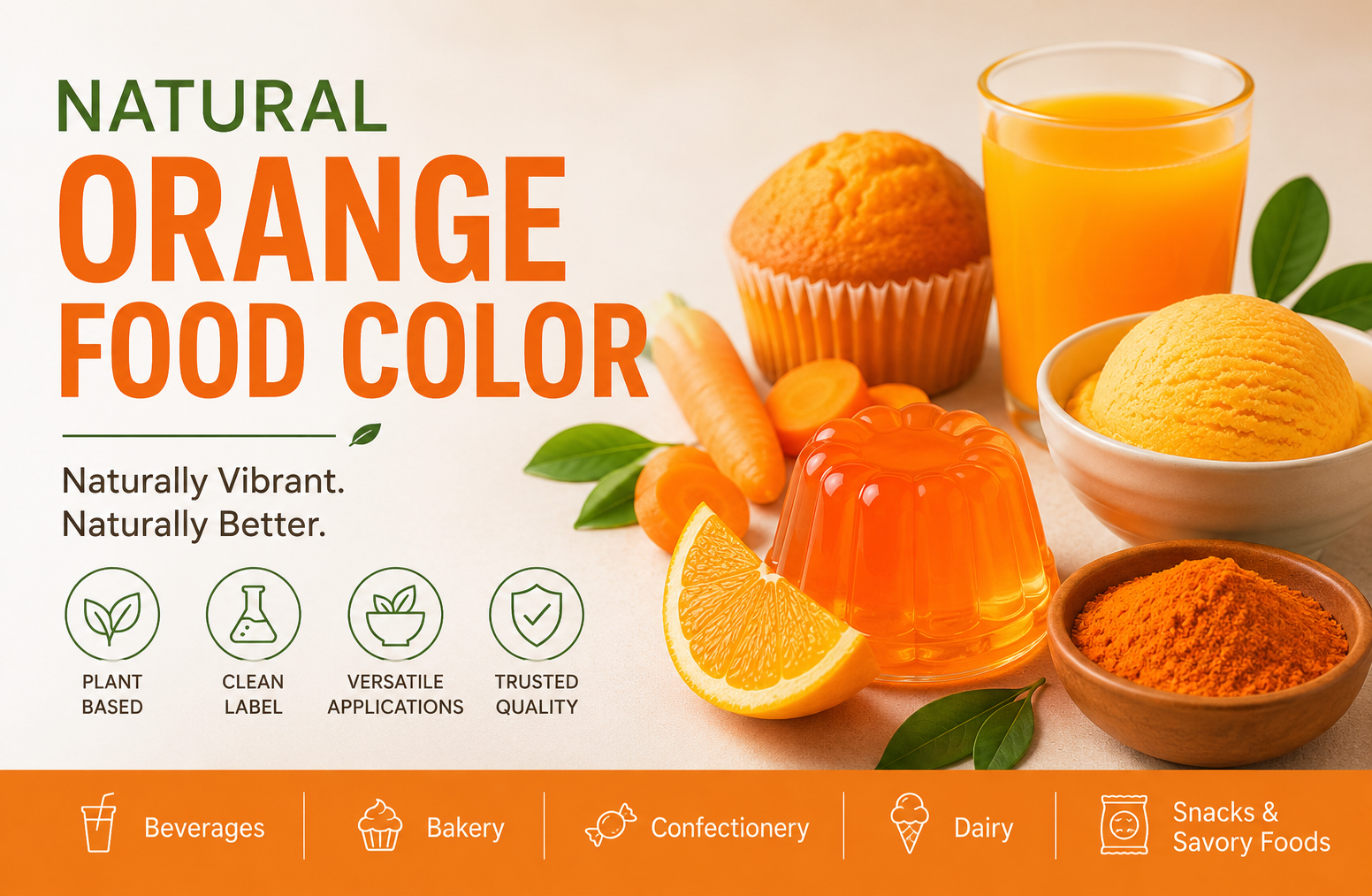
Natural Food Colors and Natural Orange Food Color: Bringing Vibrant Shades to Modern Foods
Color plays an important role in how consumers perceive food. Before tasting a product, people often judge its freshness, flavor, and quality based on its appearance. As consumers increasingly look for recognizable and naturally sourced ingredients, food manufacturers are exploring alternatives to synthetic dyes. This has led to growing interest in natural food colors, particularly natural orange food color.
From beverages and dairy products to bakery, confectionery, and savory foods, natural orange shades can enhance product appearance while supporting the industry’s move toward cleaner and more transparent formulations.
What Are Natural Food Colors?
Natural food colors are coloring ingredients obtained from naturally occurring sources such as plants, fruits, vegetables, spices, algae, and other botanical materials. They are used to enhance, restore, or create color in food and beverage products.
Some commonly used natural food color sources include:
- Annatto – Yellow to orange shades
- Paprika – Orange to red shades
- Beta carotene – Yellow to orange shades
- Turmeric – Bright yellow shades
- Beetroot – Red and pink shades
- Chlorophyll – Green shades
- Spirulina – Blue and blue-green shades
- Anthocyanins – Red, purple, and blue shades depending on the formulation
The increasing availability of these ingredients gives manufacturers greater flexibility when developing naturally colored products.
Why Is Natural Orange Food Color in Demand?
Orange is a particularly versatile food color. It can communicate different flavor and product characteristics depending on the application.
Orange shades are commonly associated with:
- Citrus and fruit flavors
- Freshness
- Warmth
- Energy
- Richness
- Appetite appeal
For food brands, orange can also provide strong shelf presence and help distinguish products from competitors.
The growing demand for natural orange food color is closely connected with consumer interest in products made with naturally derived ingredients.
Common Sources of Natural Orange Food Color
Different natural pigments can produce orange shades, with the choice depending on the desired color, formulation, and processing conditions.
Beta Carotene
Beta carotene is a naturally occurring carotenoid that can provide yellow to orange shades. It is widely used in food and beverage applications and can be available in different formulations depending on the product system.
Paprika
Paprika-derived pigments provide orange to red shades and are particularly useful in savory foods, snacks, sauces, and seasonings.
Annatto
Annatto is obtained from the seeds of the achiote tree and contains pigments such as bixin and norbixin. Depending on the form and application, annatto can provide yellow, golden, and orange shades.
Carrot and Other Vegetable Sources
Carrot concentrates and other naturally pigmented vegetables can also contribute orange tones in selected food applications.
Applications of Natural Orange Food Color
Natural orange food color can be used across a broad range of food categories.
Beverages
Orange is commonly used in:
- Fruit drinks
- Flavored beverages
- Sports and functional drinks
- Juice-based products
- Dairy beverages
The right natural color system can help create an appealing appearance that complements the expected flavor profile.
Dairy Products
Natural orange colors can be used in:
- Ice creams
- Yogurts
- Flavored milk
- Cheese products
- Dessert preparations
For example, orange shades can complement mango, orange, peach, and other fruit-inspired products.
Bakery Products
Cakes, creams, fillings, frostings, biscuits, and pastries can use natural orange food color to create attractive visual effects.
This is particularly useful for seasonal products and fruit-flavored bakery products.
Confectionery
Candies, gummies, jellies, coatings, and other confectionery products often depend heavily on color for consumer appeal.
Natural orange shades can help create products inspired by citrus, mango, peach, and other flavors.
Snacks and Savory Foods
Paprika and other natural orange pigments are particularly useful in:
- Snack seasonings
- Chips
- Crackers
- Savory coatings
- Sauces
- Ready-to-eat foods
They can provide both visual appeal and, depending on the ingredient, additional sensory characteristics.
Benefits of Natural Orange Food Color
Supports Natural Ingredient Positioning
Naturally sourced color ingredients can help manufacturers respond to growing consumer interest in natural formulations.
Attractive Appearance
Orange provides a vibrant and distinctive appearance that can improve product appeal.
Multiple Shade Options
Different pigment sources and formulations can provide shades ranging from light yellow-orange to deeper reddish-orange.
Broad Application Potential
Natural orange colors can be formulated for use in water-based, oil-based, and other food systems depending on the pigment and application.
Supports Product Differentiation
A carefully selected orange shade can help products communicate flavor, freshness, and brand identity.
Challenges When Using Natural Orange Food Color
Natural colors can behave differently from synthetic dyes, so formulation requires careful consideration.
Heat Stability
Processing temperatures can influence the intensity and stability of some natural pigments.
Light Exposure
Prolonged exposure to light may affect the color of certain natural pigments.
Oxidation
Oxygen can contribute to pigment degradation in some formulations.
pH
The stability and appearance of natural pigments can depend on the pH of the final product.
Application-Specific Requirements
A color that performs well in a beverage may not perform identically in a high-fat cream or confectionery coating.
For this reason, selecting the appropriate pigment, formulation, dosage, and processing conditions is essential.
Choosing the Right Natural Orange Food Color
Food manufacturers should consider several factors when selecting a natural orange color:
- Desired shade – Light yellow-orange, golden orange, or deep orange-red.
- Food matrix – Beverage, dairy, bakery, confectionery, or savory product.
- Processing conditions – Heat, shear, drying, or other processes.
- pH – The acidity of the finished product can affect color performance.
- Storage conditions – Light, oxygen, temperature, and shelf life can influence stability.
- Labeling requirements – The color source should be appropriate for the intended market and regulatory framework.
Working with an experienced natural color supplier can help manufacturers identify the most suitable solution for a particular formulation.
The Future of Natural Food Colors
The demand for natural food colors is expected to continue as food brands respond to changing consumer preferences. Advances in extraction, stabilization, emulsification, and formulation technologies are helping improve the performance of naturally derived pigments.
Natural orange food color is particularly well positioned because orange is widely used across beverages, dairy, bakery, confectionery, and savory foods. As manufacturers continue developing products with simpler and more recognizable ingredient profiles, natural orange pigments will remain an important part of modern food formulation.
Final Thoughts
Natural food colors are becoming an increasingly important part of food product development. Among the different shades available, natural orange food color offers versatility, visual impact, and broad application potential.
Whether derived from beta carotene, paprika, annatto, or other natural sources, orange pigments can help manufacturers create attractive products while responding to the growing preference for naturally sourced ingredients.
As food technology continues to advance, the combination of natural food colors and improved formulation techniques will give manufacturers greater opportunities to develop vibrant, appealing products that meet evolving consumer expectations.